
Learn · October 2026
Soft Food After Thyroidectomy: Creamy, Slow Scrambled Eggs
By ThyroBase · 1 min read
Share
Soft eggs for a sore throat
A sore throat and a tight feeling when you swallow are normal in the first days after thyroid surgery. Australian hospitals advise eating and drinking as you are able, with soft food at first.
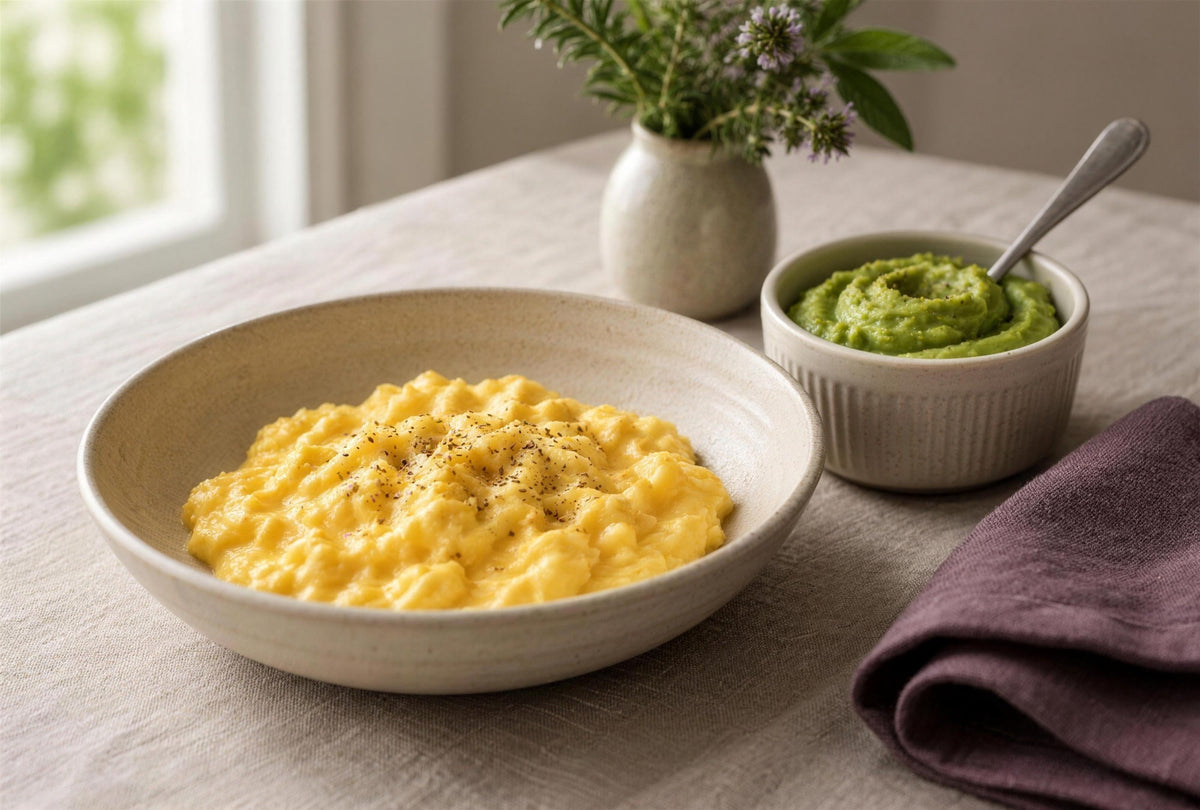
Scrambled eggs cooked low and slow stay soft and creamy, so they go down easily. Serve them on their own, or with mashed avocado.
Serves 1 · Prep 2 minutes · Cook 6 minutes
What you need
- 2 eggs
- 2 tablespoons milk (or lactose-free milk)
- 1 teaspoon butter
- A pinch of salt
- To serve (optional): half a ripe avocado, mashed, or a slice of soft bread with the crusts removed
How to make it
- Whisk the eggs, milk and salt in a bowl until no streaks of white remain.
- Melt the butter in a small non-stick pan over low heat.
- Pour in the eggs and leave them for 20 seconds, then stir slowly with a spatula, pushing the set egg from the edges into the middle.
- Keep stirring gently over low heat for 3 to 5 minutes. Take the pan off while the eggs still look slightly wet; they finish cooking on the plate.
- Serve warm, not hot, with mashed avocado or soft bread if you like.
Notes before you start
- Timing with your tablet: the Australian levothyroxine label says to take it with water on an empty stomach, at least 30 minutes and preferably 60 minutes before food. This recipe is food, so it follows that gap.
- Eat slowly and take small mouthfuls. If swallowing is getting worse rather than better, or you can't keep fluids down, contact your surgical team.
- Drink plenty of fluids alongside meals in the first few days.
Why it suits a thyroid routine
- Scrambled eggs are on the list of foods that are often easier to eat in the first week after thyroid surgery, alongside porridge, yoghurt, soup and mashed vegetables.
- Eggs add protein. Eating enough protein matters during recovery, as it does for everyone.
- There is no special thyroidectomy diet backed by research: soft and comfortable first, then a normal balanced diet.
This is everyday food, not treatment. Check with your doctor or dietitian about advice for you.
Take this to your next appointment.
The free Fine on Paper Checklist: the questions worth asking when your tests say fine and you feel anything but. Straight to your inbox.